The technology stack of an effective engineering leader in 2026 looks fundamentally different from what it did five years ago. AI-assisted development, cloud-native platforms, and integrated observability have changed what it means to architect, build, and operate enterprise systems — and changed what CTOs and technology leaders need to understand to lead effectively.
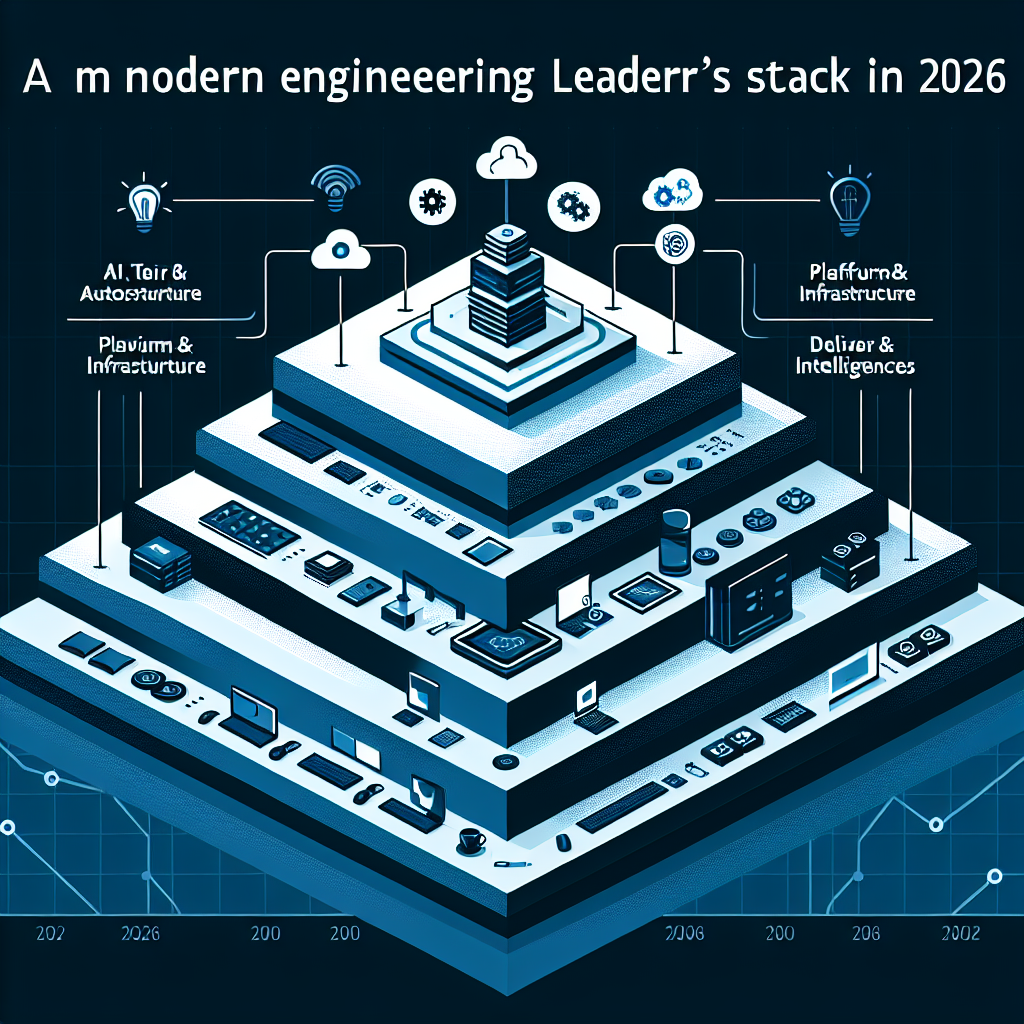
The AI layer
AI tools have shifted from experimental to foundational in 2026. Effective engineering leaders understand the capabilities and limitations of the AI tools their teams use — not at an implementation level, but at the level of what they can reliably produce, where they introduce risk, and how to build processes that leverage their strengths without depending on their unreliable outputs.
AI-assisted development (GitHub Copilot, Cursor, and similar tools) has measurably changed engineering velocity for many teams. The leader’s job is not to evaluate these tools technically — it is to understand their impact on code quality, security posture, and team learning, and to establish the review practices that maintain standards as AI-generated code enters the codebase at higher volumes.
The platform layer
AWS remains the dominant enterprise cloud platform, but the operational model has shifted significantly. Modern engineering leaders do not need to understand EC2 instance selection at a detailed level — they need to understand Kubernetes-based platform architecture, the economics of managed versus self-managed services, and the security and compliance implications of their cloud configuration choices.
Infrastructure as code — Terraform, Pulumi — is now table stakes. An engineering leader who cannot review and reason about infrastructure definitions is operating with incomplete visibility into their own platform. This does not require deep Terraform expertise, but it requires enough familiarity to read a plan output and understand what it will do.
The delivery layer
GitOps — ArgoCD, Flux — has replaced manual deployment processes in mature engineering organisations. The delivery layer question for technology leaders is no longer whether to automate deployments, but how to structure deployment architecture to support the business’s release velocity requirements while maintaining the control necessary for compliance and incident management.
Observability — Grafana, distributed tracing, structured logging — has become the primary tool for engineering leaders to understand what their systems are actually doing. Leaders who rely on weekly status reports rather than real-time observability data are managing by assumption rather than by evidence.
The intelligence layer
The data and intelligence layer — feature stores, vector databases, ML platforms, analytics pipelines — is the area of fastest change in the modern engineering stack. Engineering leaders do not need to be ML practitioners, but they do need to understand the infrastructure requirements of AI initiatives well enough to resource them accurately, evaluate build-versus-buy decisions, and assess the operational risks of putting ML models in production.